
WEBSITE SUPPORT · MELBOURNE
Website Support & Ongoing Improvements Melbourne
Keep your website useful as your business changes.
Your website needs attention after launch: services change, information becomes outdated and customer journeys need checking. LinQ AI helps Melbourne founders and service businesses organise website updates and focused improvements, with a clear request process, agreed priorities and a record of what changed.
Melbourne based · Projects scoped around your business
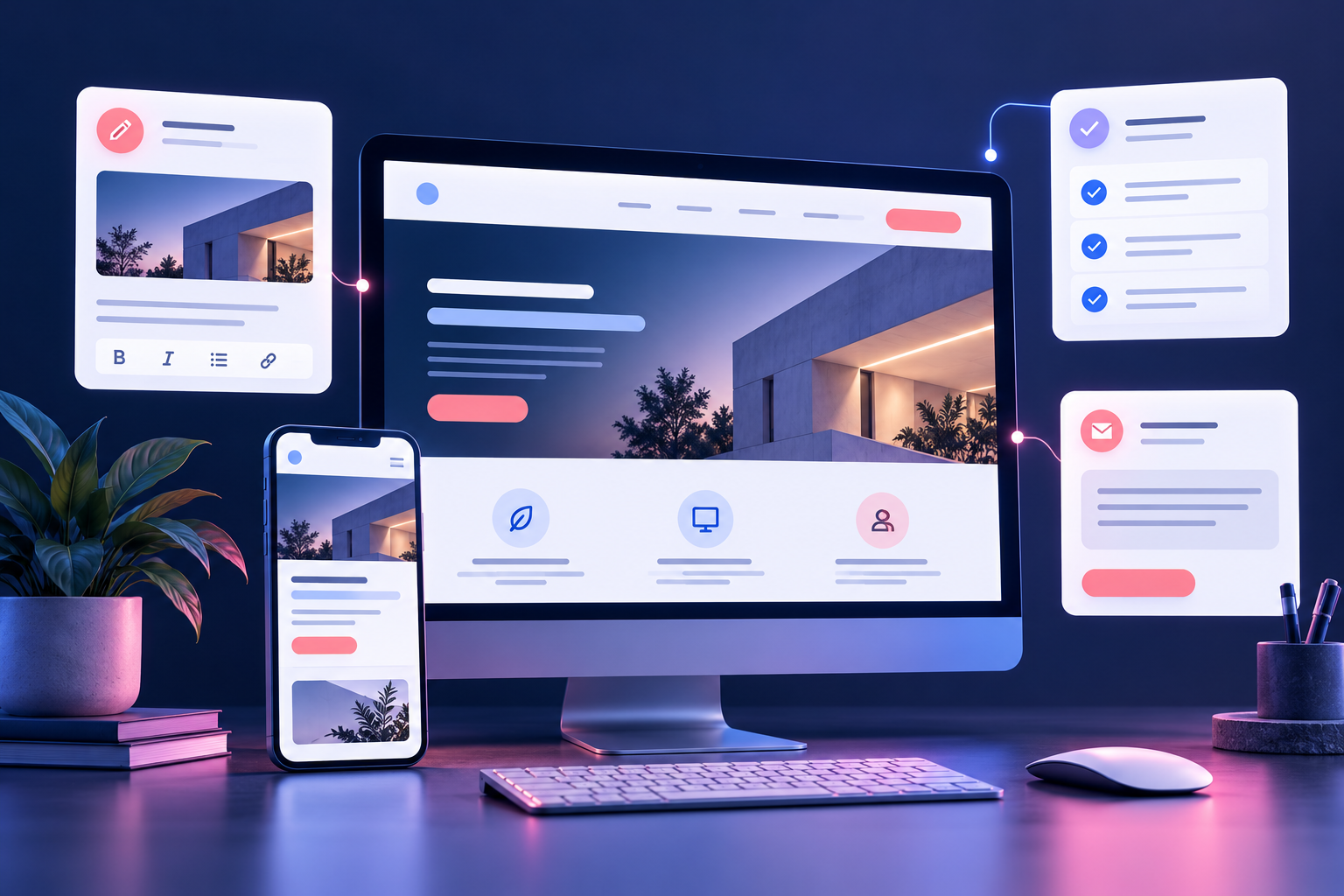
AFTER YOUR WEBSITE GOES LIVE
Keep the important details and journeys current.
Start with the pages customers rely on and the changes your team needs to make. Agree a manageable scope for the website and systems you actually use.
Keep business information accurate
Update agreed service details, business information, images and calls to action when your offer changes. Work from approved copy and assets so visitors see information your business can stand behind.
Review the enquiry journey
Check the important phone, email, contact and booking routes in the agreed scope. When something fails, record the affected page, expected behaviour and destination so the issue can be investigated with the right provider.
Make focused page improvements
Refine a confusing section, replace an outdated image or improve a mobile layout without starting an undefined rebuild. Larger changes are assessed separately so the ongoing work stays clear and reviewable.
Begin with the website, access and responsibilities
A useful support arrangement starts with a review of the current website and the changes you expect to need. We identify the platform, hosting arrangement, domain ownership, important integrations and the people who can approve work. Support for an existing site depends on its setup, available access and what can reasonably be changed. The initial review establishes that fit before an ongoing scope is agreed.
The proposal separates page and content work from hosting, software, email and other provider responsibilities. It states what LinQ AI will handle, what you supply and who needs to be involved when another system is affected. Backup, recovery and software-update responsibilities are agreed for the actual platform. Access should be limited to the work required, with ownership and any handover recorded.
Turn requests into a clear queue of changes
A support request works best when it identifies the page, the issue and the intended result. Send the relevant address, approved replacement wording or image, and any timing constraints. A screenshot can help explain a layout problem. For a broken enquiry route, include the device, steps taken and the expected destination. This gives the review a concrete starting point and reduces avoidable back-and-forth.
Requests are prioritised against the agreed arrangement and the effect on the business. A changed phone number, a broken booking link and a new page concept need different decisions. We confirm the included work, dependencies and approval point before implementation. If the request expands into a new service page, integration or redesign, the extra work is scoped explicitly rather than assumed to be part of a minor update.
Review what changed and keep the next action visible
Checks follow the change being made. A content update needs accurate approved wording and working links; a layout change needs a review at relevant screen sizes. Where an enquiry form is included, the review can cover labels, instructions, completion feedback and the agreed delivery path. A working page alone does not establish that an email reached its recipient, so delivery checks need the relevant access and a clear test recipient.
The change record should identify the affected page, work completed, checks performed and anything still waiting on approval or a provider. Search-related edits can include page titles, internal links and consistency between the visible page and its markup. Search reporting is included when specifically agreed and access is available. Ongoing updates do not guarantee indexing, rankings or enquiries; the work should be assessed against its documented scope and relevant evidence.
A USEFUL SUPPORT REQUEST
Send a request we can act on.
A short, specific brief helps establish the work and the checks needed. Use this example structure when asking about a website update.
The page and the issue
Share the page URL and describe what is outdated, confusing or failing. Include the device and steps if the issue affects a customer action.
The intended change
Provide the approved replacement copy, image or contact destination. State what should happen after the change and who can approve it.
Timing and ownership
Note any business deadline, the person responsible and other providers involved. Timing and inclusion are confirmed after the request is reviewed.
FROM IDEA TO IMPLEMENTATION
A practical process, with clear review points.
Review & agree
Confirm the website setup, business priorities, permissions and whether the requested work fits an ongoing arrangement. Define the scope and responsibilities.
Request & prioritise
Gather the page address, issue, approved assets and intended result. Agree the next changes, dependencies and review points before work starts.
Implement & check
Complete the approved update and carry out checks relevant to the change. Identify issues that require your input or another provider’s action.
Record & follow up
Keep a clear record of completed changes, checks and open items. Review the next priority or quote additional work when the scope changes.
BEFORE YOU START
Your questions, answered.
Start with your business problem and the tools you already use. We will work through the next practical step.
Ask about your project →Can you support a website someone else built?
We can start by reviewing the platform, access, current condition and work you need. Compatibility and the support scope are confirmed after that review. A site may need a separate repair or handover before ongoing updates are practical. Bring the website address and details of your current provider to the first conversation.
What is included, and how is support priced?
The proposal sets the included tasks, available capacity, request process, review points and costs. Content updates and small page improvements can be included; new pages, substantial design work, paid software, hosting and integrations are included only when specified. Ask for a scope based on your actual website and expected requests rather than assuming every type of work is covered.
Do you provide emergency or round-the-clock support?
This page does not offer round-the-clock emergency cover or a fixed response-time commitment. Availability, delivery expectations and how urgent issues are handled are agreed in the support arrangement. Hosting, email and other provider incidents may need the relevant provider’s support channel. Tell us about any business-critical dependency before agreeing the scope.
Who handles backups, software updates and account ownership?
These responsibilities are recorded for the website and platform in use. The agreement identifies who manages hosting, backups, recovery, software changes and third-party subscriptions, and which checks are included. Your business should retain ownership of its domain and accounts. We agree the necessary access and handover process so responsibilities remain clear if providers change.
CONNECTED SERVICES
Explore the next part of your system.
Sources and further reading
Primary guidance relevant to this page. Practical examples are LinQ AI’s explanations; a linked source does not endorse the agency.
Published by LinQ AI · Our approach · Updated