
WEBSITE DESIGN · MELBOURNE
Website Design Melbourne for Service Businesses
Make your offer clear. Make the next step easy.
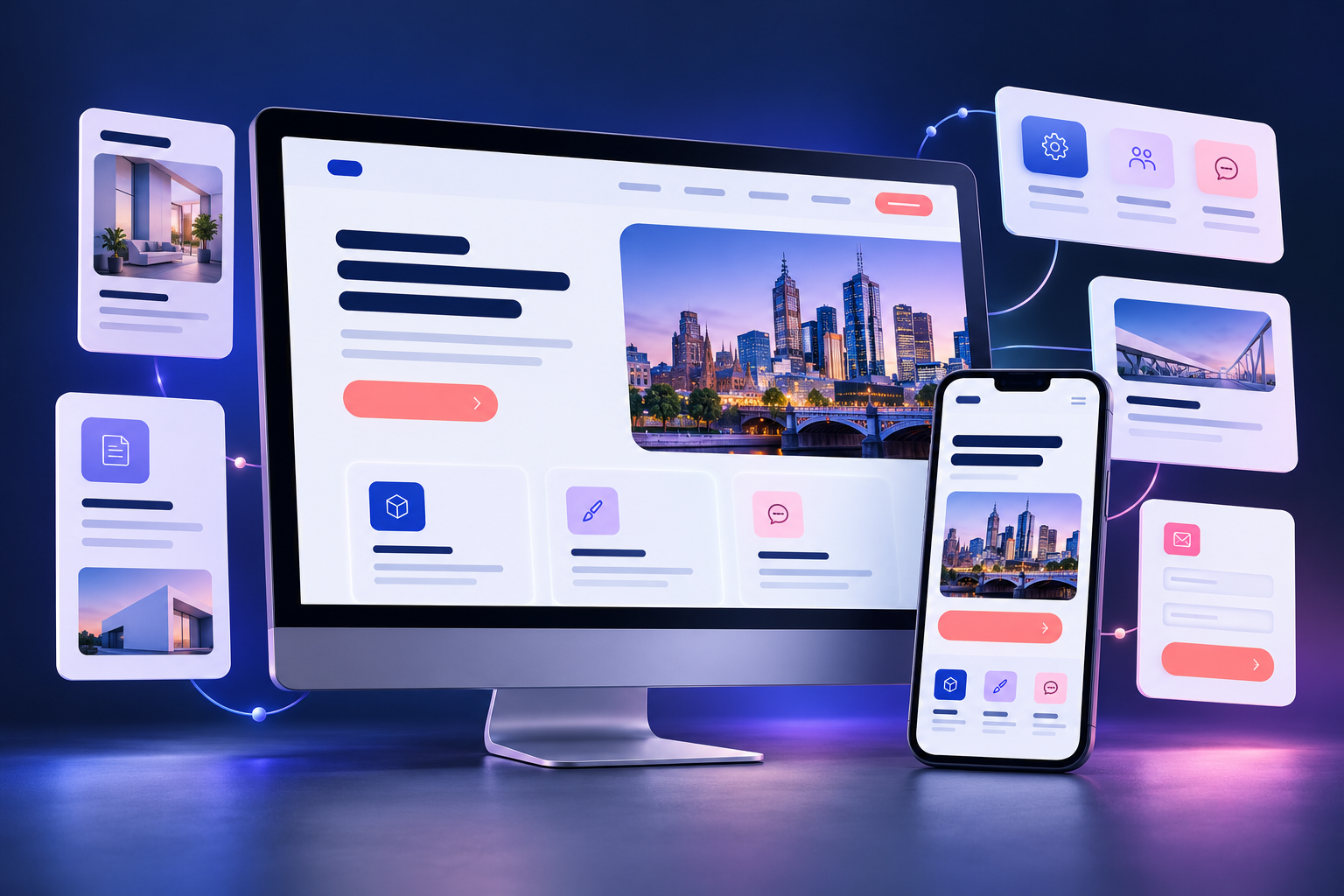
Your website should help a customer understand what you do, decide whether it fits their needs and contact you with confidence. LinQ AI plans and builds websites for Melbourne founders and service businesses, connecting useful content, mobile layouts and practical enquiry or booking journeys.
Melbourne based · New websites & focused improvements
WEBSITES FOR SERVICE BUSINESSES
Build around the way your customers choose.
Give visitors the information they need, in an order that helps them take the next step.
A new service business website
Turn your offer, experience and contact details into a coherent set of pages. Start with the services customers actually buy, the questions they ask and a straightforward way to make an enquiry.
An existing website that needs clarity
Review confusing navigation, repeated content and unclear calls to action. Keep useful pages and identify whether focused changes or a wider rebuild best fit the current site and business.
A better enquiry or booking journey
Connect service information with the phone, email, form or booking system you use. Agree the fields, recipient, confirmations and testing needed for any enquiry integration included in the scope.
Start with the offer and the pages your customers need
A website brief starts with a real customer decision. Who needs the service, what problem brings them to you and what do they need to know before contacting you? We use those answers to plan the page structure, headings, navigation and primary calls to action. The aim is a useful route through the business rather than a long list of disconnected services.
A service business may need a homepage, focused service pages, an About page, genuine project or client evidence, accurate service-area information and contact details. The agreed scope identifies which pages are being written, redesigned or retained. You supply the business facts, approved imagery and evidence; content planning and writing responsibilities are made clear before the build.
Design the mobile experience around a useful next step
Customers may arrive directly on a service page from search or a social post. Each important page should explain the offer in its own context, link to relevant evidence and provide an obvious next step. Mobile layouts need readable text, usable navigation and contact actions that remain easy to reach without obscuring the content.
Where forms are included, we plan visible labels, the information genuinely needed and clear completion or error messages. Booking tools, email recipients, provider subscriptions and access requirements are agreed before integration. The enquiry route is tested against its intended destination during delivery. Accessibility checks, keyboard use and image descriptions are part of the agreed review; any formal accessibility audit is scoped separately.
Build search foundations into the structure
Useful service content and ordinary internal links help visitors and search engines understand the site. The build can include descriptive page titles, a clear heading structure, canonical URLs, visible breadcrumbs and structured data that matches the page. Important pages should be reachable through navigation or relevant contextual links, with final canonical URLs included in the sitemap.
An existing website also needs a record of valuable URLs before changes begin. We agree which addresses stay, which content is combined and where redirects are needed. The launch review checks priority pages, mobile behaviour, links and the enquiry journey. Search Console and analytics setup or review can be included when access and scope allow. Search platforms decide crawling, indexing and rankings, so the proposal focuses on the work and checks we can deliver.
A DOCUMENTED WEBSITE EXAMPLE
A service business journey you can explore.
EZMUSCLE
Related business · founded by Anthony Nitti
EZMUSCLE is Anthony's personal training business. Its website provides a practical example of connecting a service offer, local information and a booking route. The documented website work includes Brighton and Bayside service navigation, content structure and contact pathways.
Explore the EZMUSCLE websiteExplain the service
Visitors can explore training options and read the information relevant to their goals before making contact.
Make the service area clear
Brighton and Bayside information sits alongside the service and contact journey, helping customers assess whether the offer suits their location.
Connect to a booking
Visible contact actions and the assessment booking link give visitors a practical next step from the website.
FROM BRIEF TO HANDOVER
Know what happens at each stage.
The proposal connects the work, review points and responsibilities to an agreed scope.
Brief & scope
Review the current website, audience, service offer, existing URLs and enquiry needs. Confirm pages, responsibilities, costs and exclusions in a proposal.
Structure & design
Plan the navigation and customer journey, prepare the agreed content and review the page layouts before the main build is completed.
Build & connect
Implement the approved pages and mobile layouts. Connect the agreed enquiry or booking route and configure the relevant search foundations.
Check & hand over
Review key pages, links and contact actions. Confirm ownership, access and ongoing responsibilities, with follow-up work recorded separately.
PLANNING YOUR WEBSITE
Decide the scope with confidence.
Bring your questions about pages, content, booking tools and ongoing ownership.
Ask about your website →How much does a website cost, and how long will it take?
The proposal follows the page count, content work, design needs and integrations. It identifies deliverables, exclusions, feedback stages and any hosting or provider costs. Timing also depends on access, supplied content and approvals, so we agree the schedule after reviewing the brief. Ongoing updates and support are specified separately.
Can you improve my current website and keep its useful pages?
Yes. We start by reviewing the current platform, access, page structure and enquiry route. A focused improvement may be enough. If a rebuild is appropriate, the scope should identify retained content, existing URLs and necessary redirects before launch. The platform recommendation follows what the business needs and can maintain.
Who provides the content, images and booking tools?
You provide accurate business information, permission to use images and support for any credentials or results. We agree who plans, writes and approves the content. Existing booking systems can be assessed for integration; account access, subscriptions and responsibility for messages are confirmed before implementation. A new form or custom integration is included only when it is explicitly scoped.
Does website design include SEO and ongoing management?
The website scope can include page titles, useful service content, internal links, canonicals, breadcrumbs, a sitemap and relevant structured data. A continuing SEO programme, paid advertising, ongoing content and maintenance are separate services unless included in the proposal. We can discuss the next priority after launch using the information and measurement available.
START WITH YOUR BUSINESS
Bring a website and a clear priority.
A useful first conversation starts with what you offer and what needs to work better.
Discuss your websiteThree things to bring
- Your current website or an outline of the business
- The main service and the customers you want to reach
- The enquiry or booking step you want visitors to take
Prefer email? Send your brief to LinQ AI.
CONNECTED SERVICES
Connect the website to the next priority.
How to prioritise a website and search review · AnthonyNitti.com founder website project · Explore project summaries
Sources and further reading
Primary guidance relevant to this page. Practical examples are LinQ AI’s explanations; a linked source does not endorse the agency.
Published by LinQ AI · Our approach · Updated